At its UTM Global Innovation Summit in Viladecans, Spain, the Urban Transitions Mission announces new city members, expanded collaboration programmes and practical tools to accelerate people-centred, net-zero urban transitions.
VILADECANS, SPAIN (3 November 2026) – The Urban Transitions Mission (UTM), a global initiative co-led by the European Commission and the Global Covenant of Mayors for Climate & Energy (GCoM), has expanded its global cohort to 150 cities across 54 countries, marking a new milestone in its efforts to help cities turn climate commitments into practical solutions.
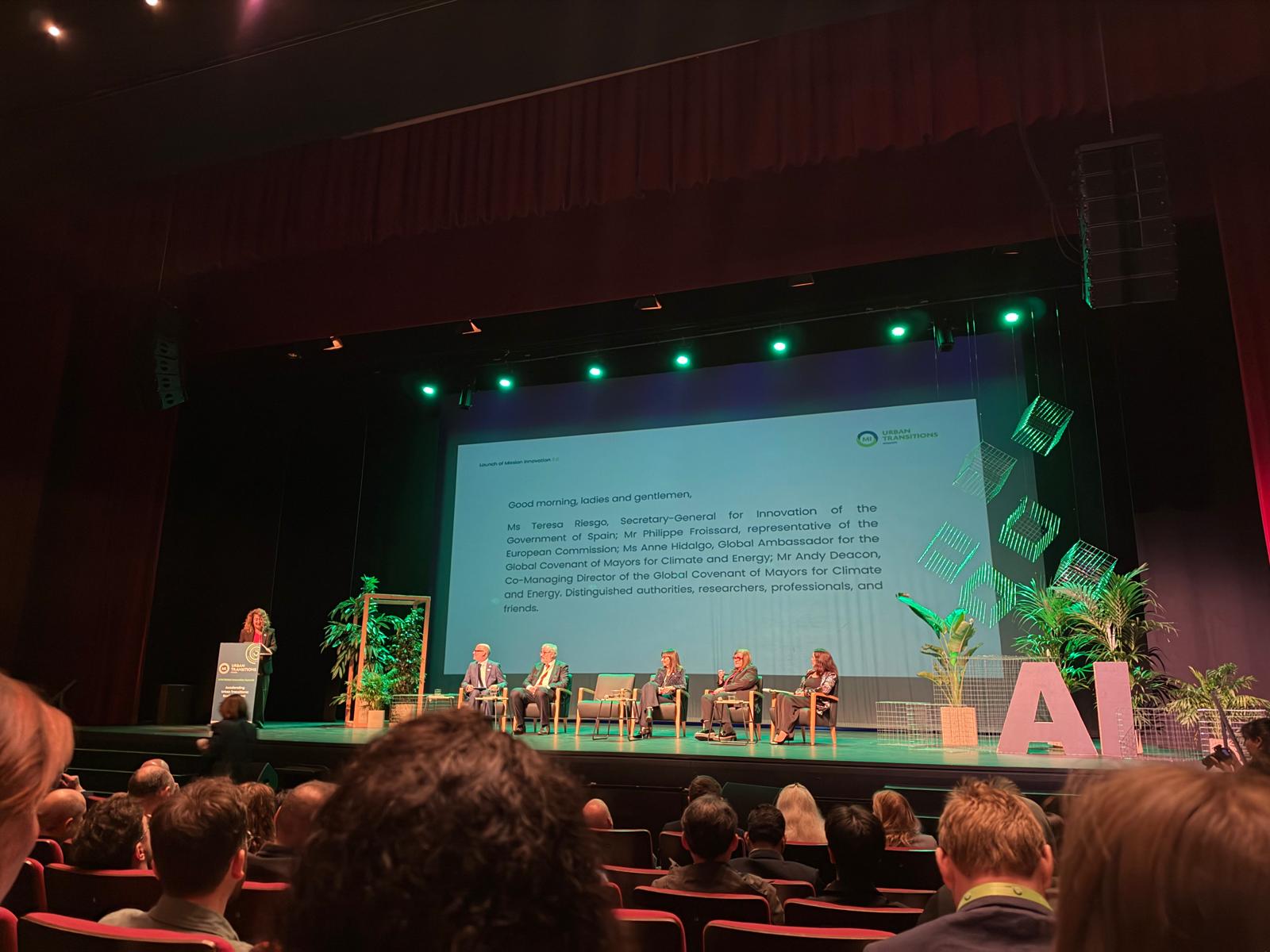
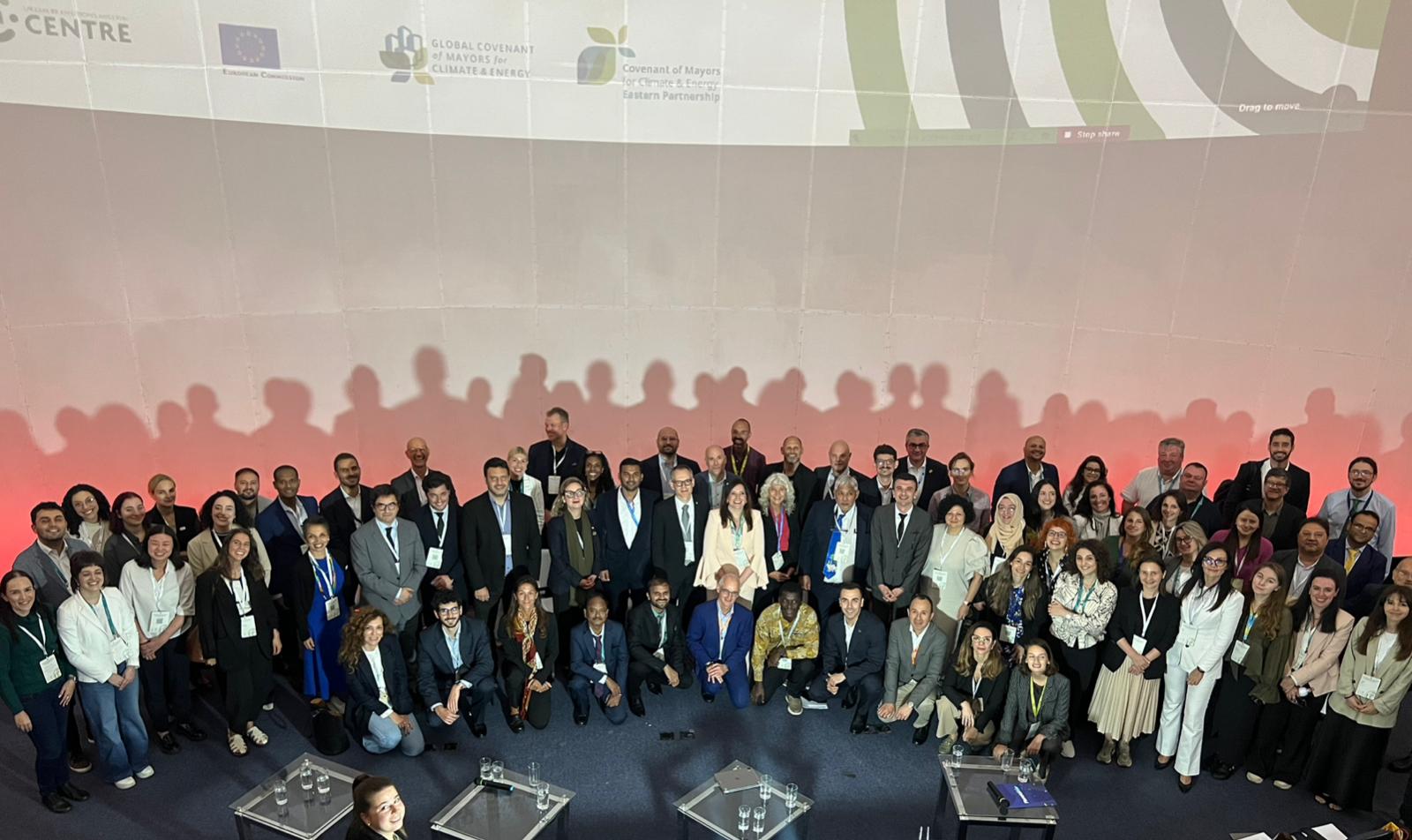
The announcement was made today at the UTM Global Innovation Summit 2026 in Viladecans, Spain, which brought together 200 representatives from cities, governments, research institutions and the private sector to explore how Artificial Intelligence (AI), digital innovation and international partnerships can accelerate the transition to sustainable, climate-neutral cities.
Under the theme “Accelerating Urban Transitions: Scaling Impact with AI and Digital Innovation,” the fourth annual Summit focused on bridging the gap between climate ambition and implementation, connecting cities with the expertise, technology and partnerships needed to deliver measurable results for their communities.
“Urban transitions demand mission-driven alliances. Governments, cities, universities, and innovators must act together with urgency and purpose. Spain is delighted to host the Global Innovation Alliance Summit in Viladecans on 3 November. The Urban Transitions Mission shows that when we unite science with local leadership, we accelerate solutions that are scalable, equitable, and capable of delivering climate-neutral cities for everyone,” said Diana Morant, Spanish Minister of Research, Innovation and Universities.
The Summit also featured new announcements, including the expansion of UTM’s City2City knowledge exchange Programme, opportunities to pilot AI-powered climate solutions, new publications on digital innovation and sustainable urban development, and an expanded Global Innovation Alliance.
“The Summit serves as a vital platform connecting civic leaders, researchers, and innovators in open/action-oriented dialogue to translate digital potential into pragmatic, city-level solutions. Through the continuous work of our Global Innovation Alliance, we know that lasting progress happens when local governments exchange knowledge across borders, learn from one another, and test scalable solutions on the ground,” said Andy Deacon, Co-Managing Director of the Global Covenant of Mayors for Climate & Energy.
“Digital and AI solutions offer exciting opportunities to help cities turn climate ambition into action. They can help cities test solutions before investing and turn climate plans into projects that attract finance. At the same time, the environmental footprint of digital and AI solutions has to be considered. These are not just future possibilities,” said Miriam Badino, Technical Coordinator for the Urban Transitions Mission.
150 Cities Driving the Global Urban Energy Transition
With the addition of new members from eight countries, the UTM cohort has grown to 150 cities in 2026, now spanning 54 countries. The Mission aims to reach 300 cities by 2030, the threshold required, set by UTM, to unleash the full collective scaling power of local governments and transform urban innovation approaches into global standards.
The 32 newcomers to the cohort included our summit host, Viladecans (Spain), alongside Incheon (Korea), Lyon (France), Porto (Portugal), Sivas (Türkiye), and Borongan (Philippines).
The expansion reflects growing demand among local governments for practical support to implement climate and energy strategies, access technical expertise and financing, and collaborate with other cities facing similar challenges.
Based on their existing climate targets, compared with a business-as-usual scenario, cities participating in UTM could collectively reduce greenhouse gas emissions by more than 390 million tonnes of CO₂ equivalent annually by 2030, rising to more than 610 million tonnes annually by 2050, if those targets are achieved. This is roughly equivalent to the carbon footprint of 498 million round-trip economy class flights between Incheon, South Korea and Istanbul, Türkiye.
Beyond these potential emissions reductions, UTM provides a platform for cities to identify implementation barriers, exchange proven approaches and develop partnerships with researchers, businesses and international institutions.
“Communities of cities, such as the Urban Transitions Mission and GCoM, give local governments a place to connect with one another, share the real challenges they face, learn from different experiences and reach the knowledge, partners and solutions that help accelerate urban transitions. They are the true accelerators of the urban transition,” said Anne Hidalgo, Global Ambassador of the Global Covenant of Mayors for Climate & Energy.
From Innovation to Implementation: Connecting Cities with Pathways, Solutions and Partners of the transitions
As cities face growing pressure to deliver on their climate commitments, access to technology, financing and expertise remains a major barrier to implementation. At the UTM Global Innovation Summit 2026, city leaders and innovators explored how international collaboration and emerging technological solutions can help overcome these challenges, with a particular focus on turning promising digital and AI ideas into practical tools that deliver results for communities.
“Viladecans has always believed that innovation must serve people and the planet — not the other way around. Hosting the UTM Global Innovation Summit 2026 is an opportunity to show that cities of every size can lead the way to net zero, and that AI, when guided by purpose, becomes one of our most powerful tools,” said Olga Morales, Mayor of Viladecans, Spain.
With Artificial Intelligence and Digital Solutions as its strategic focus for 2026, UTM has worked to help cities understand where technology can make a meaningful difference, from strengthening climate resilience to improving urban planning and attracting investment. Discussions at the Summit also addressed the environmental footprint of AI, reinforcing the need to ensure that technological innovation responds to real urban challenges rather than becoming an end in itself.
A central theme throughout the Summit was the importance of connecting cities with the knowledge and partners needed to move from planning to delivery. This approach is already taking shape through the UTM City2City programme, which brought together 54 cities from 27 countries in 20 pairings during 2026, enabling local governments to exchange expertise, develop joint solutions and explore opportunities for innovation pilots. Building on the Programme’s first year, UTM announced a third call for participation, open until 15 January 2027.
The same emphasis on real-world implementation was reflected in the presentation of the 2026 AI x City Climate Action Hackathon winners, whose solutions address challenges ranging from disaster response to flood misinformation and community engagement. Developed by teams from the United States, Cameroon, Kenya and India, the projects demonstrated how AI can respond to specific needs identified by cities. Through UTM, selected innovators will be connected with potential partner cities to explore local testing and implementation, helping bridge the gap between technological development and practical application.
To support this transition, UTM is also expanding the expertise and resources available to its city cohort. Its Global Innovation Alliance welcomed The Netherlands and four new partners — the Coalition for Disaster Resilient Infrastructure, Fundação Getulio Vargas, the Presencing Institute and the Urban Sustainability Directors Network — strengthening connections between local governments, research institutions and organizations working on urban sustainability.
Alongside these partnerships, UTM is developing new tools to help cities identify solutions suited to their needs. The planned UTMC 2.0 digital platform will connect local governments with technical resources, successful city pilots, capacity building opportunities and potential financing opportunities. The Summit also saw the launch of two publications. The UTM Compendium — “Digital Solutions and AI for Net-Zero, Resilient and Inclusive Urban Transitions” offers 10 key recommendations for national governments on the use of AI and digital technologies in urban transitions and a joint publication with the Driving Urban Transition Partnership (DUT) on “Positive energy districts and neighbourhoods: a global perspective on district-scale urban transitions” draws on experience from more than 100 European pilots.
The momentum will continue at the Smart City Expo World Congress in Barcelona, where UTM is participating as a Supporting Institution and co-organizing activities on 4 November to connect cities with proven approaches and opportunities for collaboration.
Looking ahead to 2027, UTM will build on these initiatives to strengthen international cooperation, advance responsible AI applications and support climate resilience through nature-based solutions. Across its growing global network, the priority remains the same: helping cities move beyond commitments and innovation concepts to solutions that can be implemented, replicated and scaled to benefit communities worldwide.
###
Media Contacts
Florence Labedays, Communications Lead; Urban Transitions Mission
utm-comms@globalcovenantofmayors.org / WhatsApp: +44 7878 110819
Fernanda Salem, Senior Manager, Media and Communications; Global Covenant of Mayors for Climate & Energy
fsalem@globalcovenantofmayors.org / WhatsApp: +55 21 97310-5812
About the Global Covenant of Mayors for Climate & Energy
The Global Covenant of Mayors for Climate & Energy (GCoM) is the world’s largest alliance for city climate leadership, uniting more than 14,000 cities and local governments across 150 countries and over 100 supporting partners. Representing more than one billion people, the alliance supports ambitious, measurable local climate and energy action through collaboration with city networks, national governments and international partners.
Co-chaired by UN Special Envoy for Climate Ambition and Solutions Michael R. Bloomberg and European Commission Executive Vice-President Teresa Ribera, GCoM works to accelerate the transition towards resilient, low-emission communities worldwide.
For more information, visit www.globalcovenantofmayors.org.
About the Urban Transitions Mission
The Urban Transitions Mission (UTM) is one of the seven missions of Mission Innovation, a global initiative accelerating clean energy innovation and progress towards the Paris Agreement goals.
Launched at COP26 in Glasgow in 2021, UTM is co-led by the European Commission, the Global Covenant of Mayors for Climate & Energy (GCoM) and JPI Urban Europe. The Mission connects cities with research institutions, businesses, national governments and international partners to accelerate sustainable, inclusive and climate-neutral urban transitions.
Its global cohort includes 150 cities across 54 countries, with the ambition to reach 300 cities by 2030.
For more information: Urban Transitions Mission